9月下旬,印尼史上繼1998年獨裁者蘇哈托倒台以來最大規模的抗爭行動,佔據國際新聞版面。英國、美國]、和其他外國媒體頭條報導成千上萬民眾在全國各地大城市示威遊行,抗議婚前性行為納入刑法。
撤銷新刑法法條,包括不得侮辱總統和提供避孕資訊,只是抗議者的訴求之一。根據網上流傳的七點聲明,訴求還包括反對廢除一條弱化反貪腐機構的新法、停止蘇門答臘和婆羅洲的森林大火,以及從印尼東邊的巴布亞地區撤軍。印尼對分裂主義的軍事鎮壓行動已經進行了數十年。
撤銷土地利用新法也在訴求清單上。
這條尚未被媒體大幅報導,但觀察者表示,它的重要性不亞於其他幾乎立法完成的爭議性法案。
評論家說,該法案定義了新的罪行,並增加了刑罰,使當局更容易監禁抵抗開發商入侵的農村居民,使農業公司能保留土地特許經營權更長的時間。
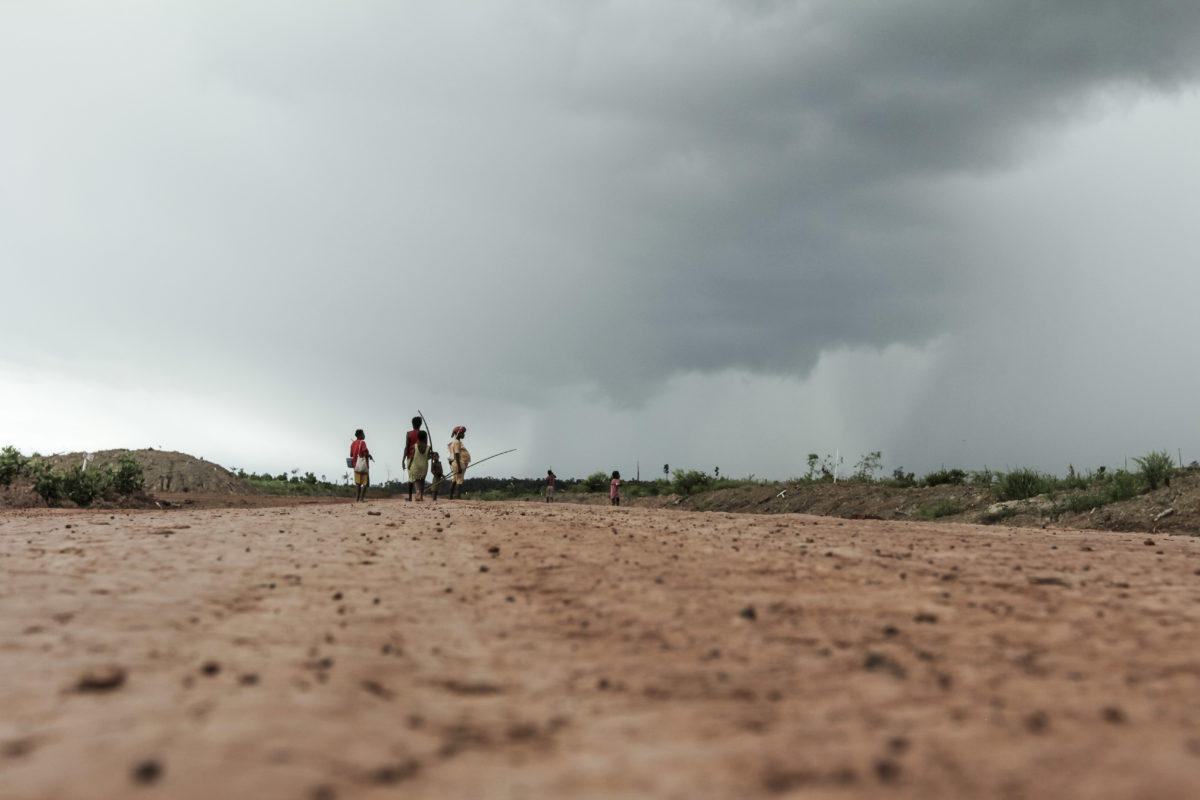 印尼巴布亞省一條切開森林的公路,涉嫌剝奪了原住民的土地所有權。Nanang Sujana攝;來源:Mongabay。
 在批評者眼中,最令人髮指的是,該法案設定了一個兩年期限,要求公民必須在期限內向政府註冊土地,否則土地將收歸國有,成為佐科威總統土地改革計畫的一部分重新分配,或授權私人公司使用。
但是,原住民尋求正式承認其土地就起碼要花兩年,通常還要更久,才能通過層層官僚關卡。因此,兩年期限對印尼弱勢的原住民權利來說更是一記沈重的打擊,印尼原住民組織「AMAN」副秘書長卡亞迪(Erasmus Cahyadi)說。
2013年印尼憲法法院作出歷史性裁決,駁回了州政府對原住民森林所有權的主張,此後總統佐科威陸續承認55個原住民群體對森林的權利,總面積達248平方公里(96平方英里) 。但是AMAN說他們欲承認的原民土地有77,600平方公里(30,000平方英里),屬於704個原住民族。
AMAN法律與人權事務負責人穆罕默德(Arman Muhammad)說,該法案違反了憲法的精神。
印尼大學生走上雅加達街頭,反對新法律弱化反貪腐機構。Hans Nicholas Jong攝;來源:Mongabay。
該法案的支持者則認為,通過該法案對於佐科威的大型土地改革計畫來說是必要的。
佐科威於今年4月當選第二個五年任期,他已承諾賦予農村社區更大的權力,控制其21.7萬平方公里(84,000平方英里)的土地,但是實踐進度緩慢。
截至10月,控制該國約一半土地的環境和林業部僅分配了總計28,000平方公里的土地,遠低於目標127,000平方公里。
民主黨國會議員卡隆(Herman Khaeron):「土地改革計畫的土地很難找。」
為了解決這個問題,卡隆說,該法案要求建立一個新的機構,稱為土地管理署,負責收購、管理和分配兩年的時間內沒有被公民登記的土地,這些土地將自動收歸國有。
根據該法案,土地管理署將充當「土地銀行」,能夠透過租賃或出售土地產生收入,同時仍以非營利組織的形式運作。該機構必須保證為「社會利益」和「發展利益」提供土地。
法案的措詞含糊,批評者擔心該機構會將土地當作商品出售給強勢投資者,以犧牲普通市民為代價。
「誰將能夠使用這個土地銀行?小農嗎?當然不是,」印尼茂物農業研究所(Bogor Institute of Agriculture, IPB)人類生態學系研究員卡友諾(Eko Cahyono)說,「這個土地銀行將為有大量資本、企業和開發計畫的人服務。」
評論家說,該法案中的其他條款將使企業受益,傷害農村社區。
該法案將允許農業公司持有「HGU」耕種權許可證,有效期長達90年,而現行規定為60年。油棕公司可以拖更久的時間才將小農地釋出給當地社區。
此外,該法條還規定,凡訂定「引起土地糾紛之惡意協議」者,將被判處5至15年監禁,「妨礙土地機關僱員和/或執法人員執行任務」者可判處兩年監禁。
倡議組織土地改革聯盟(Consortium for Agrarian Reform, KPA)秘書長卡蒂卡(Dewi Kartika)向記者,根據後項條款,反抗土地掠奪的原住民、行動人士等人可被入罪。
「它賦予警察將任何人定罪的合法性。最極端的詮釋之下,可被用來逮捕任何人。例如,當居民試圖阻止他們的土地被用來建造機場時,就可能會被逮捕。」
成百上千的印尼村莊在和農業公司對抗時陷入困境,社區成員常常以肉身擋推土機,甚至縱火燒毀公司設備。
9月26日,一名21歲的大學生在蘇拉威西省東南部省會肯達裡的大規模抗議活動中被警察槍殺。抗議活動演變成暴亂後,另一名19歲學生卡德哈維(Yusuf Qardhawi)因鈍器重創頭部而死亡。
「我們非常沮喪和失望,」參加抗議活動的社區組織者、23歲的馬斯庫裡(Mando Maskuri)說,「國家應該保護人民,但他們卻在殺死人民。」
。與印尼其他地方一樣,當地人往往缺乏證明土地所有權的文件,這使得州政府很容易在未經他們同意的情況下引入企業投資者。
馬斯庫裡說,許多旺尼居民嘗試向州政府登記其土地。但他擔心土地法案設定的時間表不切實際,最終導致居民失去土地,逼他們搬走。
大學生在肯達裡用行動劇抗議礦場開發。Kamaruddin攝,來源:Mongabay
在9月抗議活動的高峰期,對土地法案和其他爭議性法案的審議被。跛鴨議會會期即將結束,新的議員宣誓就職。
現任議員在最後一刻同意將土地法案移交至新議會會期,這表示新任議員可以從同一階段繼續審議,不必從頭開始。
根據調查性新聞機構Tempo和非政府組織Auriga Nusantara的,接下來五年負責立法工作的575名議員中,將近一半是與至少1,016家企業有聯繫的商人,其中包括採礦公司和油棕公司。
佐科威總統說,他想,使之對投資者更加友善。許多觀察家表示,不少與已列入清單。
研究人員卡友諾說,如果議員試圖通過土地法案,反對者可以在最後一道關卡提出司法審查。
同時,馬斯庫裡說他準備再次走上街頭,「如果議會要強行通過該法案,將面臨來自農民、漁民和民間社會團體的巨大阻力。」
Indonesia protests: Land bill at center of unrest by Basten Gokkon, Hans Nicholas Jong, Philip Jacobson on 3 November 2019- In recent weeks, Indonesia has seen its largest mass protests since the "people power" movement that forced President Suharto to step down in 1998.
- Among a variety of pro-democracy demands, the protesters want lawmakers to scrap a controversial bill governing land use in the country.
- The bill defines new crimes critics say could be used to imprison indigenous and other rural citizens for defending their lands against incursions by private companies.
- It also sets a two-year deadline by which citizens must register their lands with the government, or else watch them pass into state control. Activists say the provision would deal a "knockout blow" to the nation's indigenous rights movement.
JAKARTA — In late September, international news outlets caught flak for their coverage of Indonesia's largest mass protests since the 1998 uprising that led to the fall of the dictator Suharto.
Headlines published by the , , and other foreign media implied the demonstrations, involving tens of thousands of people in major cities across the country, had arisen in response to a proposed new criminal code that would ban sex before marriage.
"I did not get tear-gassed so Australians could keep having sex in Bali," one netizen on Twitter, among a barrage of reactions to the reductive reports. "This is about the future of the country."
Scrapping the criminal code changes — which also include new penalties for insulting the president and providing information about contraception — was just one of the protesters' demands, enumerated in a seven-point declaration that has circulated online. They also want the government to repeal a new law weakening the nation's anti-corruption agency, stop forest fires in Sumatra and Borneo, and withdraw troops from Indonesia's easternmost Papua region, where a military crackdown against separatists has been going on for decades.
Also on the list: scrap a proposed new law governing land use.
Though the land bill has gotten scant media coverage, observers say it is among the most potentially transformative of a raft of on the verge of being passed into law.
The bill defines new crimes and introduces increased penalties that, critics say, would make it easier for authorities to imprison rural citizens for defending their lands against incursions by developers. It would also allow plantation companies to retain vast land concessions for longer periods of time.
Most damningly in the eyes of critics, the bill sets a two-year deadline by which citizens must register their lands with the government, or else watch them pass into state control, where they could be redistributed as part of President Joko Widodo's land reform program or licensed out to private firms.
But indigenous groups seeking formal recognition of their lands already spend at least that long, and often far longer, jumping through bureaucratic hoops. The two-year deadline would therefore constitute a "knockout blow" for the nation's embattled indigenous rights movement, Erasmus Cahyadi, deputy secretary-general of AMAN, Indonesia's main advocacy group for indigenous peoples, told Mongabay.
Since 2013, when a landmark Constitutional Court ruling struck down the state's claim to indigenous peoples' forests, President Joko Widodo has recognized the rights of 55 indigenous groups to forests spanning a total of 248 square kilometers (96 square miles). But AMAN says it has mapped more than 77,600 square kilometers (30,000 square miles) of land it says belongs to 704 indigenous communities.
"The bill is contrary to the spirit of the constitution," said Arman Muhammad, AMAN's law and human rights director.

University students protest the new corruption law in Jakarta. Image by Hans Nicholas Jong/Mongabay.
The bill's supporters argue its passage is necessary to support President Widodo's flagship land reform program.
Widodo, who was elected to a second five-year term in April, has promised to give rural communities greater control over 217,000 square kilometers (84,000 square miles) of land. But progress has been slow.
As of October, the Ministry of Environment and Forestry, which controls around half of the nation's land, had only distributed a total of 28,000 square kilometers (10,800 square miles), far short of its target of 127,000 square kilometers (49,000 square miles).
"It's hard to find land for the agrarian reform [program]," Democrat Party lawmaker Herman Khaeron at a recent panel event in Jakarta.
To solve that, Herman said, the bill calls for the creation of a new body called the Land Management Agency to acquire, manage and distribute land that had gone unclaimed by citizens during the two-year window, that therefore automatically fell under state control.
The bill says the agency will function as a "land bank," implying it will be able to generate an income from leasing or selling lands, while still operating as a "nonprofit," according to the bill. The agency must guarantee the availability of land for "social interests" as well as "development interests."
The language in the bill is vague, but critics fear the agency would treat land as a commodity to be sold to powerful investors at the expense of ordinary citizens.
"Who would be able to access this land bank? Small farmers? Of course not," Eko Cahyono, a researcher in the Department of Human Ecology at the Bogor Institute of Agriculture (IPB), told Mongabay. "The 'land bank' would serve those with big capital, companies and development projects."
Other provisions in the bill would benefit corporations at the expense of rural communities, critics say.
The bill would allow plantation companies to hold a right-to-cultivate permit, known as an HGU, for 90 years, up from 60 years under the current rules.
It would also let oil palm firms wait longer before providing smallholdings to local communities, a requirement under existing laws.
Furthermore, the legislation stipulates prison time of five to 15 years for anyone who makes an "evil agreement that gives rise to a land dispute," and a jail term of two years for those who "obstruct an employee and/or law enforcement officer from carrying out tasks in the land sector."
The latter provision could be used to "criminalize indigenous peoples, activists or anyone who tries to organize" against a land grab, Dewi Kartika, the secretary-general of the Consortium for Agrarian Reform (KPA), an advocacy group, reporters in Jakarta recently.
"It grants the police legal legitimacy to criminalize anyone," she said. "Of course this will be interpreted to the maximum extent possible, to freely arrest anyone. For example, if residents try to stand in the way of their land being used to build an airport."
Hundreds, if not thousands, of Indonesian villages are embroiled in conflict with natural resources firm, with community members often resorting to physically blocking bulldozers or even setting fire to company facilities.
On Sept. 26, a 21-year-old college student in Kendari, the capital of Southeast Sulawesi province and one of the cities where mass protests took place in September, was shot dead by police. Another student in Kendari, 19-year-old Yusuf Qardhawi, died of blunt-force head injuries after a protest turned into a violent riot.
"We were all so upset and disappointed," Mando Maskuri, 23, a community organizer who joined the protests in Kendari, told Mongabay. "The state is supposed to protect us, but they're killing us."
Residents of Mando's home island of Wawonii are with mining firms that hold permits to operate on their lands. As elsewhere in Indonesia, locals tend to lack documents backing their land claims, making it easy for the state to bring in corporate investors without their consent.
Many people in Wawonii are trying to register their lands with the state, Mando said. But he fears the land bill sets an unrealistic timeline that will eventually cause residents to lose their lands, forcing them to migrate to other parts of the country.

Students in Kendari stage a mock burial in early 2019 to express their opposition to the mining in Wawonii. Image by Kamaruddin for Mongabay.
At the height of the protests in September, deliberations on the land bill and other controversial legislation were . The lame-duck parliament was nearing the end of its session. New lawmakers have since been sworn in.
In their final hour, however, the previous lawmakers agreed to "carry over" the land bill to the current parliament session, meaning deliberations can be resumed from the same stage by the new batch of legislators, rather than having to start all over again.
Nearly half of the 575 lawmakers for the next five years are businesspeople who are affiliated with at least 1,016 companies, including mining and oil palm, according to an by investigative journalism outlet Tempo and Auriga Nusantara, an NGO.
President Widodo says he wants to to make them friendlier to investors; many observers have said are on the list.
If lawmakers try to pass the land bill, opponents could file a judicial review in a last-ditch attempt to oppose it, said Eko, the researcher.
In the meantime, Mando says he is ready to take to the streets again.
"If parliament tries to pass the bill, there will be massive resistance from farmers, fishermen, and civil society groups," he said.
※ 全文及圖片詳見:
作者
如果有一件事是重要的,如果能為孩子實現一個願望,那就是人類與大自然和諧共存。
於特有生物研究保育中心服務,小鳥和棲地是主要的研究對象。是龜毛的讀者,認為龜毛是探索世界的美德。
本站聲明:網站內容來源於https://e-info.org.tw/,如有侵權,請聯繫我們,我們將及時處理【其他文章推薦】
※一般小吃店常見使用的nbr耐油手套,是否有含耐酸鹼作用?
※迴轉式空壓機性能介紹 !
※海線倉儲類人員薪水待遇最新情報
※(全省)堆高機租賃保養一覽表
※高效率洗滌塔活性碳設備,能去除多少有機溶劑?
※射出成型技師工作甘苦談
Orignal From: 9月下旬,印尼史上繼1998年獨裁者蘇哈托倒台以來最大規模的抗爭行動,佔據國際新聞版面
留言
張貼留言